Mambe is an ancient green powder derived from the sacred coca leaf, generally shared during powerful Amazonian ceremonies. However, to truly understand what is mambe, we should not only consider it as a stimulant, but also — and perhaps more importantly — as a cultural practice that embodies balance between body and mind, word and silence, human and Earth.
Used for centuries by Indigenous communities across Colombia, Peru, and Brazil, often in conjunction with another powerful plant medicine — ambil — mambe occupies a central place in daily life and ritual. It sustains energy during long journeys, sharpens focus for communal discussions, and symbolizes truth in speech and harmony in listening. It offers not only physical clarity but also a deeper invitation. To slow down, to be present, and to engage with the natural intelligence that flows through every leaf
Here, is everything you need to know about mambe, its benefits, and how to consume it for spiritual growth and healing.
What Is Mambe?
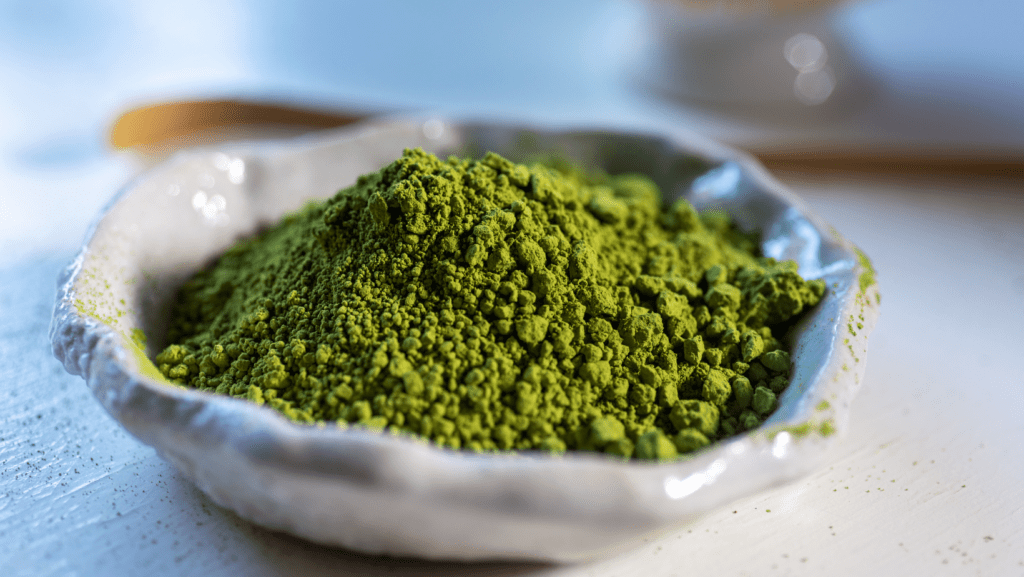
Mambe, often called mambé de coca, is a green powder made from toasted coca leaves that are finely ground and blended with the alkaline ashes of plants such as yarumo (Cecropia peltata) or cetico. This process releases the plant’s full range of nutrients and gentle alkaloids, creating a balanced and natural preparation.A small pinch of mambe is placed between the cheek and the gums, where it slowly dissolves, releasing its properties over time. This allows the user to absorb its effects gradually, offering alertness without agitation and clarity without anxiety.
A similar preparation known as ypadú (or ipadu) exists in other parts of the Amazon. While each community follows its own method and ceremony, both are expressions of the same ancestral wisdom. A plant respected not for its intoxicating properties, as often happens in the Western world, but for its balance, endurance, and communication.
How is mambe made?
The preparation of mambe is both an art and a ritual. In Indigenous Amazonian cosmology, making mambe is understood as giving breath to the leaf. Awakening its essence so that it may speak with the people who consume it.
1. The Selection of the Coca Leaves
The process begins with the careful selection of coca leaves (Erythroxylum coca or Erythroxylum novogranatense). Traditionally, they are cultivated in the humid lowlands of Colombia, Peru, and parts of Brazil. These are not the same hybrid varieties used industrially for alkaloid extraction. Instead, they are native cultivars grown under forest shade, where the soil remains rich in organic matter.
Elders choose the leaves at specific lunar phases, often during the waxing moon, when the plant’s vitality is at its strongest. Leaves that are too young or too mature are avoided, as they either lack potency or carry excessive bitterness. Once harvested, the leaves are sun-dried slowly, never baked or smoked directly, to preserve their nutrients and spiritual energy — the pneuma of the plant.
2. Toasting the Leaves
When the leaves are dry, they are toasted over a clay or earthen pot, traditionally fueled by gentle embers rather than open flame. This step requires patience and constant movement. The goal is not to burn the leaves but to activate their aromatic oils and essential alkaloids. This concentrates their properties while eliminating excess moisture.
Experienced mambe makers listen to the leaves: the soft crackling sound indicates readiness. When the color shifts from bright green to a muted olive tone and the scent becomes warm and resinous, the leaves are removed from the heat. Over-toasting would destroy their medicinal compounds and spiritual potency, so the process is guided more by intuition than by temperature.
3. Preparing the Plant Ash.
The second component of mambe is the alkaline ash obtained from specific Amazonian trees, most commonly yarumo (Cecropia peltata), cetico (Cecropia sciadophylla), or cogollo de yarumo hembra. The selection of the right species is critical: elders choose plants that embody balance and protection.
Branches, leaves, or bark are dried and burned slowly until they turn to fine, silvery ash. The process must be smokeless and even, ensuring the ash retains the minerals and carbonates that will later activate the coca alkaloids and neutralize the acidity of the leaf. This ash functions as a natural catalyst. It transforms the mixture into a digestible, non-toxic form and giving mambe its characteristic alkaline flavor.
Some regions, such as the Colombian Caquetá or Putumayo, add small portions of ash from other plants like plátano or bijao leaves to refine taste and texture — though each community guards its own precise proportions as cultural heritage.
4. Grinding and Mixing
Once both components are ready, the toasted coca leaves are cooled and placed into a large wooden mortar called a mambeadero or pilón. Using a heavy pestle, the leaves are ground slowly until they become a fine powder. This stage can take hours and is traditionally accompanied by conversation, songs, or prayers — transforming the act of grinding into a communal ritual of gratitude.
When the texture reaches a talc-like consistency, the ash is added in small increments, mixed evenly until the color shifts to a vibrant, luminous green. The final proportion depends on the strength of the ash and the quality of the leaves. Generally, it ranges from five to ten percent ash by weight. The mixture is sieved through a fine cloth to remove any fibers or impurities. The resulting powder is soft, dry, and subtly fragrant — what we know as mambe.
5. Energizing and Storing the Mambe
Freshly prepared mambe is not immediately used. It is first “fed” with breath and intention, as elders say. The maker gently blows on the powder, offering words of gratitude and connection. This act of exhalation — the mambe breath — symbolizes the union of human and plant spirit.
The finished mambe is stored in a calabash (gourd), which is kept dry and clean. The gourd represents the womb of the Earth, the vessel of creation, and it protects the powder from humidity and contamination. Among the Huitoto, the calabash is sometimes wrapped in cotton threads dyed with natural pigments. High-quality mambe can remain fresh for many months if kept away from direct sunlight and moisture.
What Does Mambe Mean Spiritually?
Mambe carries deep symbolic meaning within Amazonian cosmology. It is often described as the “green breath” of the forest, representing clarity of thought, coherence of speech, and unity of purpose. When elders gather in the mambeadero — a circular communal house where discussions, decisions, and teachings occur — mambe becomes the center of exchange. Each participant uses it while speaking, grounding their words in respect, truth, and awareness. The act of mambear (using mambe) is thus both physical and spiritual: it aligns intention with language, transforming speech into a sacred act.
In traditional cosmology, mambe is considered the masculine principle — energy of action, structure, and direction. It is often paired with ambíl, a viscous paste made from tobacco, which represents the feminine principle. The balance between mambe and ambíl mirrors the dual forces of nature, emphasizing that wisdom arises not from dominance, but from equilibrium.
Spiritually, mambe teaches listening as a form of intelligence. It invites the user to slow down, to think before speaking, and to speak only from clarity. In a world that often glorifies speed and reaction, mambe reminds us that true strength lies in awareness. The capacity to be present and thoughtful in every word and action.
What Are the Benefits of Mambe?
The benefits of mambe are multifaceted, encompassing physiological, mental, and emotional dimensions. Used in moderation and within its traditional context, mambe offers a natural and sustainable form of energy and focus. Modern users often compare it to a meditative calm or mindful alertness.
Physical Benefits
Coca leaves contain over 14 natural alkaloids, including a mild form of cocaine in trace amounts that, when balanced by plant ash, does not produce any euphoric or addictive effects. Instead, it supports oxygen uptake, digestion, and cardiovascular efficiency. The leaves are also rich in calcium, potassium, phosphorus, and vitamins B1, B2, and C, making mambe a gentle nutritional supplement.
Athletes and travelers at high altitudes traditionally chew coca leaves or mambe to improve endurance and counteract fatigue or hypoxia, a use that modern studies have validated.
Mental and Emotional Benefits
Mambe promotes mental clarity, focus, and balanced concentration without overstimulation. It quiets internal noise, making it easier to sustain attention and process thoughts coherently — which is why elders use it during long dialogues or councils.
Emotionally, mambe is grounding. It reduces anxiety, sharpens perception, and helps stabilize mood — a natural support for emotional regulation and mindfulness.
Holistic and Energetic Benefits
Beyond the physical and cognitive, mambe enhances a sense of connection — to self, others, and environment. It reminds users that the body and mind are extensions of the same life force, guided by rhythm and awareness rather than control or tension.
What Are the Effects of Mambe?
The effects of mambe can be subtle yet profound. After placing a small pinch in the mouth, users typically experience a gentle tingling or numbing sensation, followed by an increase in mental clarity, focus, and bodily warmth.
Unlike caffeine or synthetic stimulants, mambe does not cause agitation or spikes in heart rate. Instead, it induces a calm alertness — an ideal state for study, reflection, or ceremony. It can enhance breathing efficiency, reduce appetite slightly, and promote steady energy throughout the day.
In group settings, mambe fosters open communication and emotional transparency, often described as “the medicine of dialogue.” It helps participants maintain presence and respect during conversations, ensuring that speech flows from understanding rather than reaction.
These effects are not only pharmacological but relational — shaped by the user’s intention, the context, and the ancestral lineage of the practice.
How Do You Use Mambe?
Traditionally, mambe is not swallowed but rather held in the mouth, between the cheek and gums, where its alkaloids and minerals are slowly absorbed through the mucosa. A small amount — roughly the tip of a teaspoon — is enough.
The practice is rhythmic: users take a pinch, hold it, and periodically “feed” the mixture with their breath and saliva. The goal is not to consume large quantities, but to maintain a gentle, sustained connection with the plant’s essence.
In modern wellness or integrative contexts, mambe can be used:
- During meditation, prayer, or journaling.
- Before creative work or study sessions, to enhance focus.
- As part of plant-based rituals or ceremonial gatherings led by trained facilitators.
Always approach mambe with intention and respect — never as a casual stimulant or recreational substance. The most important instruction from Indigenous teachers is simple: “Mambe with your heart awake.”
Is Mambe a Drug?
This is a frequent question: Is mambe psychedelic? No. Scientifically, mambe contains alkaloids derived from coca leaves, but its concentration is extremely low and non-addictive when prepared traditionally. Culturally, mambe is not a drug but a sacred food and medicine. It is classified in Colombia as part of Indigenous cultural heritage, protected under national and international conventions on traditional knowledge.
However, in countries where coca leaves are restricted, mambe may fall under legal gray areas. The key distinction lies in intent and refinement: cocaine is a chemically isolated extract, while mambe remains a whole-plant preparation used ceremonially and nutritionally. Therefore, while it is not a narcotic, users outside traditional contexts should always verify local import or possession laws before acquiring mambe.
Are There Any Risks of Mambe?
When used in moderation and in a controlled setting, such as a mambe ceremony in Mexico, this plant medicine is considered safe and non-toxic. Indigenous users consume it daily throughout their lives with no evidence of dependence or organ harm.
Still, some precautions are worth noting:
- Avoid excessive doses, which may cause mild restlessness or sleeplessness.
- Not recommended during pregnancy or for individuals with serious cardiovascular conditions.
- Sourcing is crucial: ensure that mambe is ethically produced and free from contaminants.
- Avoid mixing with alcohol, caffeine, or other stimulants.
The greatest “risk” of mambe lies not in the plant, but in disrespecting its cultural and ecological integrity. Using it without understanding its origin or significance risks perpetuating extraction and cultural misuse. Always obtain mambe from verified Indigenous cooperatives or fair-trade ethnobotanical projects that reinvest in the communities that protect the forest.
Quick facts About Mambe
Mambe is made from toasted coca leaves (Erythroxylum coca) mixed with alkaline plant ashes, usually from trees such as yarumo (Cecropia peltata) or cetico. The ash balances the natural acidity of the coca leaf, creating a smooth green powder that is rich in minerals and traditionally used for energy, clarity, and communication.
Traditionally, just a small pinch of mambe is tucked inside the cheek and left to rest. There’s no rush — it slowly melts into the mouth, releasing a gentle wave of clarity and calm. In Amazonian culture, mambe accompanies deep talks, moments of reflection, and rituals where words and presence matter. Today, some people also use it in quiet meditation, creative focus, or energy work.
The benefits of mambe are both physical and mental: a steady flow of alertness without anxiety, mental clarity without caffeine’s crash, and a sense of grounded openness. It nourishes the nervous system, eases fatigue, and — for many — invites a feeling of connection, not only with others but with the natural rhythm of thought and breath.
Yes — that’s something to know. Since mambe naturally contains coca alkaloids, it can trigger a positive result for coca derivatives on some drug screenings. Those in regulated professions should exercise caution and transparency.